
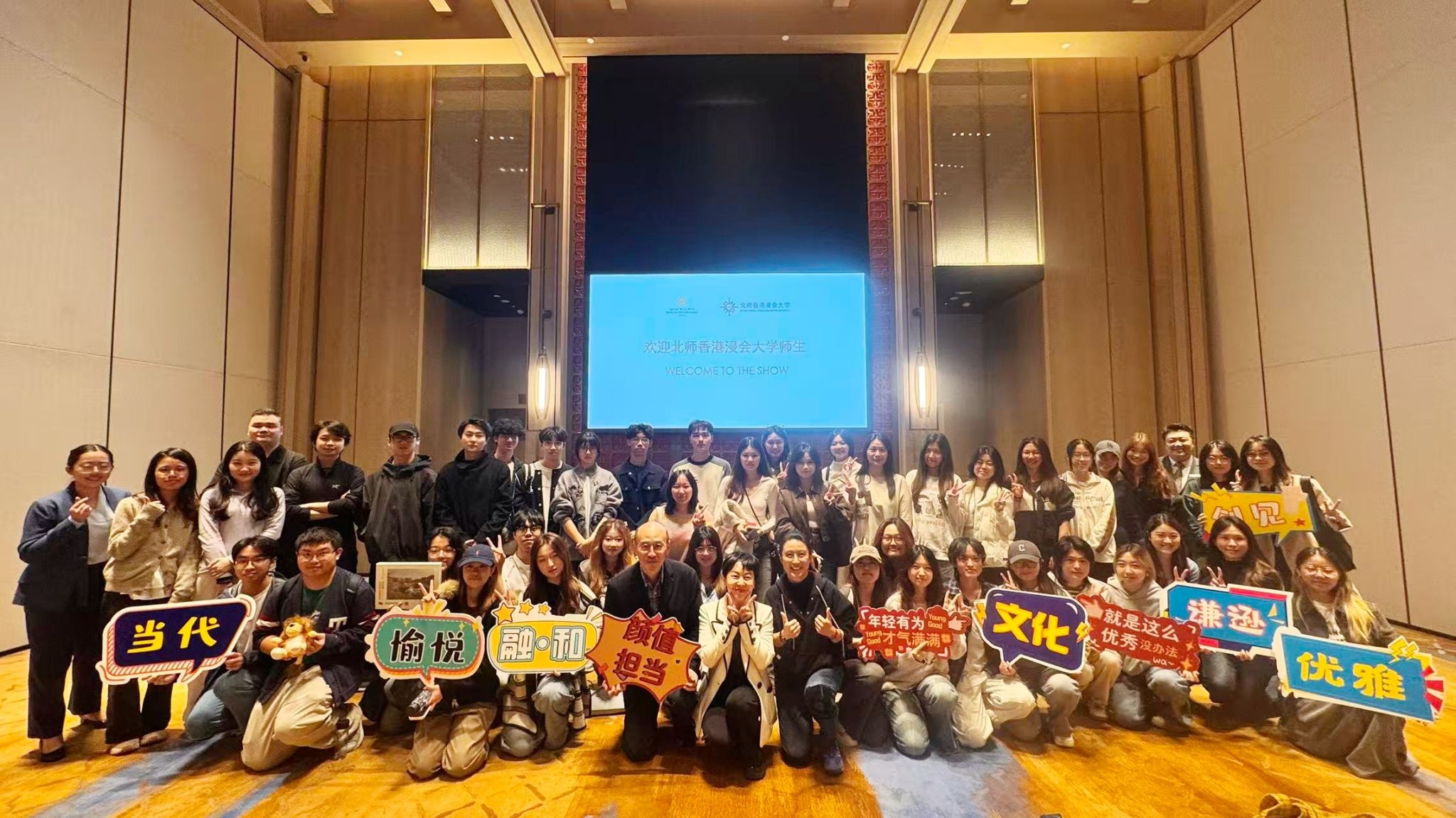
On the afternoon of December 3, 2025, guided by Ms. Wanqi Wan, Lecturer of Culture, Creativity and Management (CCM) programme, students enrolled in the "Introduction to Hospitality and Tourism" course embarked on a distinctive practical activity at Zhuhai MGM Reserve Hotel.
The exploration journey of hospitality culture unfolded gently in front of the manor-style gate. Mr. Genlin Wang, the training manager of the hotel's HR team, provided a detailed explanation of the Chinese aesthetics and cultural significances embedded in the hotel's architecture: the dragon fish sculpture at the entrance symbolizes "standing atop"; the stone formation in the front garden's water landscape is sourced from Phoenix Mountain, resembling mountain formations and introducing natural charm into the manor. He further elaborated on the craftsmanship and symbolism of the traditional architectural element "drum stones" and the Lingnan characteristic "oyster shell walls". Flanking the entrance hall, one can see garden courtyards with longan and lychee trees, both derived from Lingnan flora, cleverly linking regional culture.
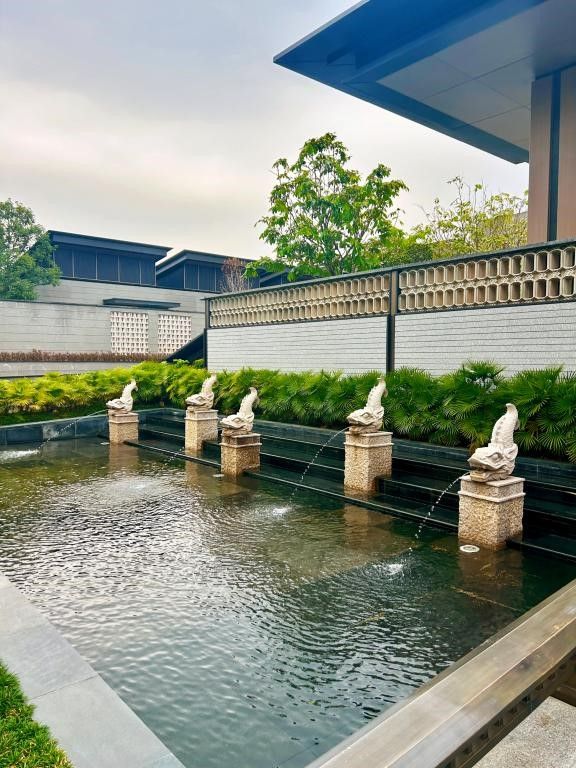
Hotel's entrance fountain with a dragon fish sculpture symbolizing "standing atop"
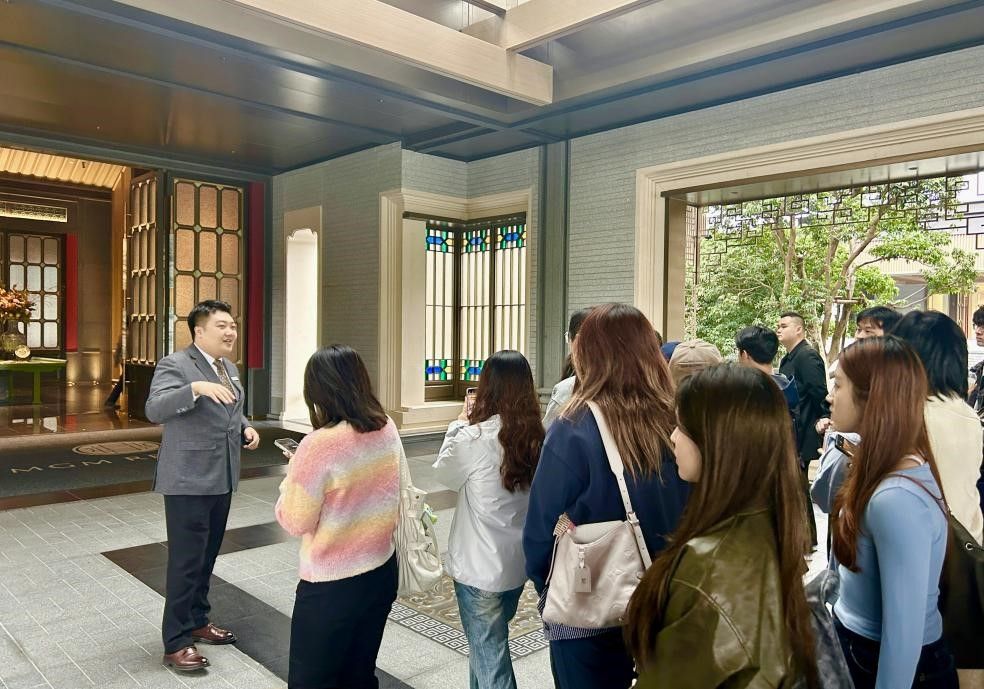
Mr. Wang explained to the students at the hotel's lobby
According to Mr. Wang, the overall planning and architectural design of the hotel were penned by Academician He Jingtang, the designer of the China Pavilion at the Shanghai World Expo, merging the "contemporary Lingnan" style with Cantonese gardens, modern aesthetics, and traditional manor layouts. Situated against Phoenix Mountain and facing Xiangshan Lake, it creates a contemporary Lingnan serene landscape nestled within a bustling metropolis.
Leading through the lobby, the group arrived at the courtyard area built with the concept of "water converging in the hall". Mr. Wang expounded on the poetic design of "Rain in Lingnan" and the "carefree" life attitude conveyed by the monkey sculpture placed here.
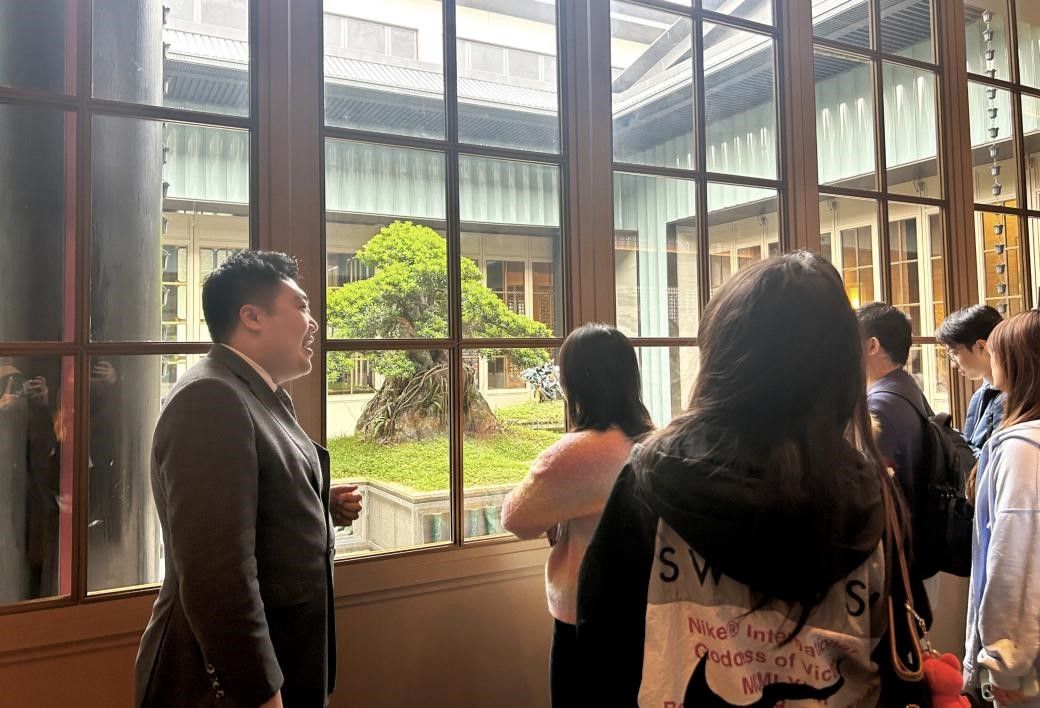
Professor Wang led students to visit the courtyard area built with the concept of "water converging in the hall"
Subsequently, the students split into two groups; guided by Mr. Wang, and training supervisor Ms. Pan, they deeply explored the hotel's north district suites, Linqi courtyard villas, detached duplex villas in the south district, distinctive restaurants, and areas like the "Little Lion Club" designed for family guests, gaining comprehensive insights into the hotel's facility layout and path design.
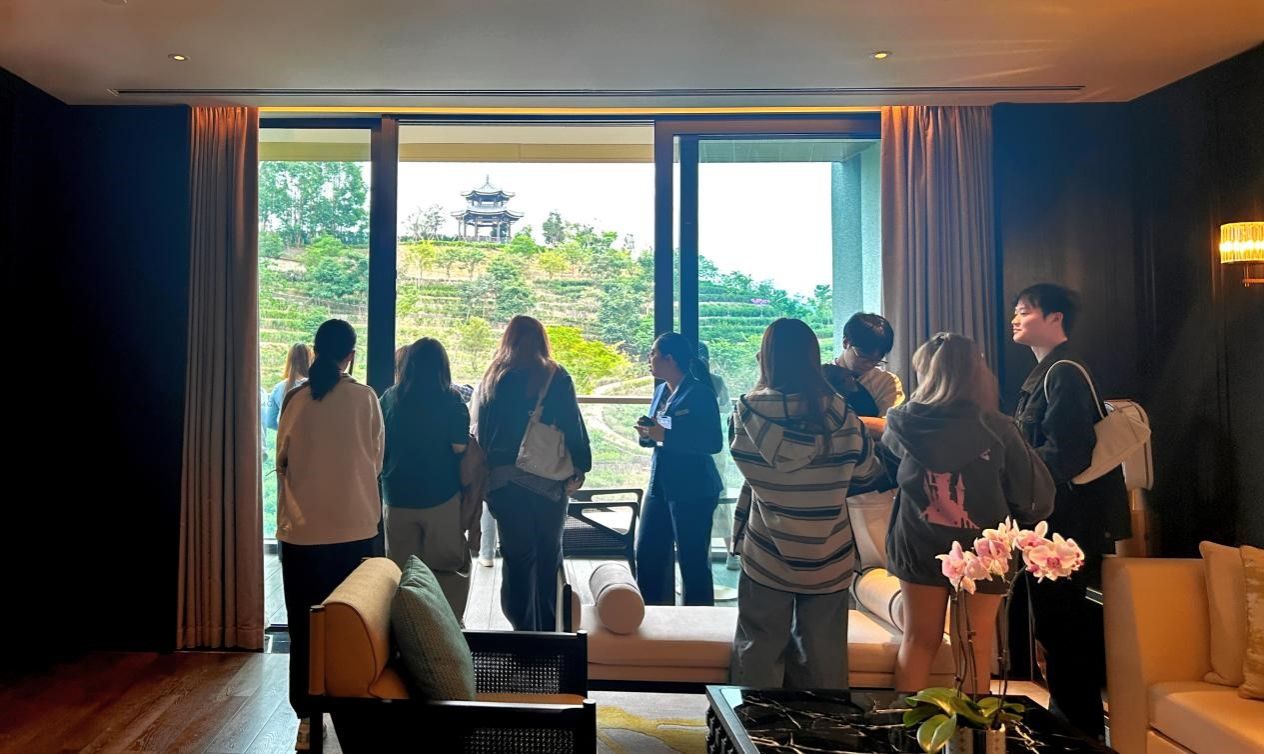
Students followed Ms. Pan to visit the north district suites of the hotel
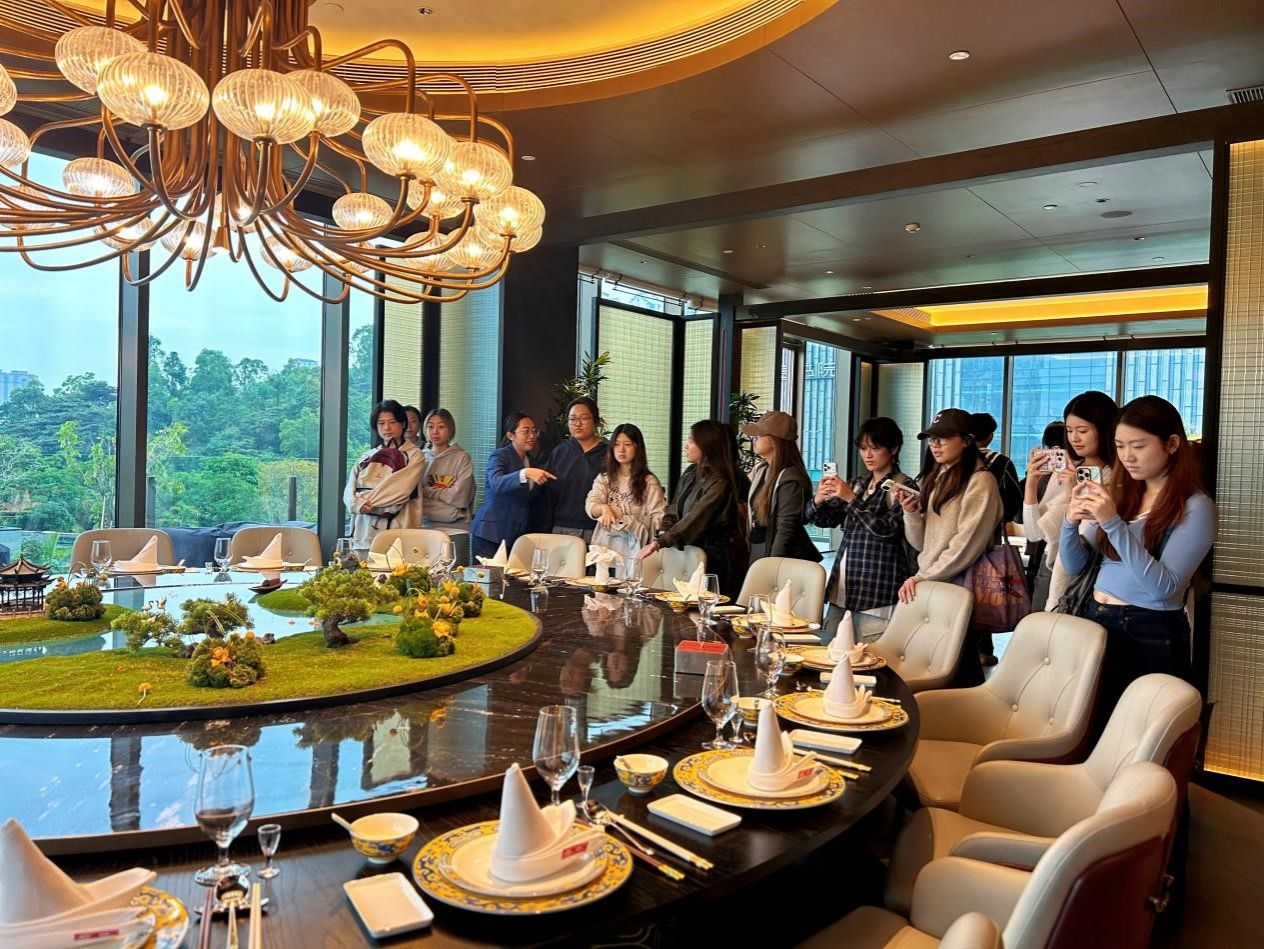
Ms. Pan explained the design concept of restaurant box seating to the students
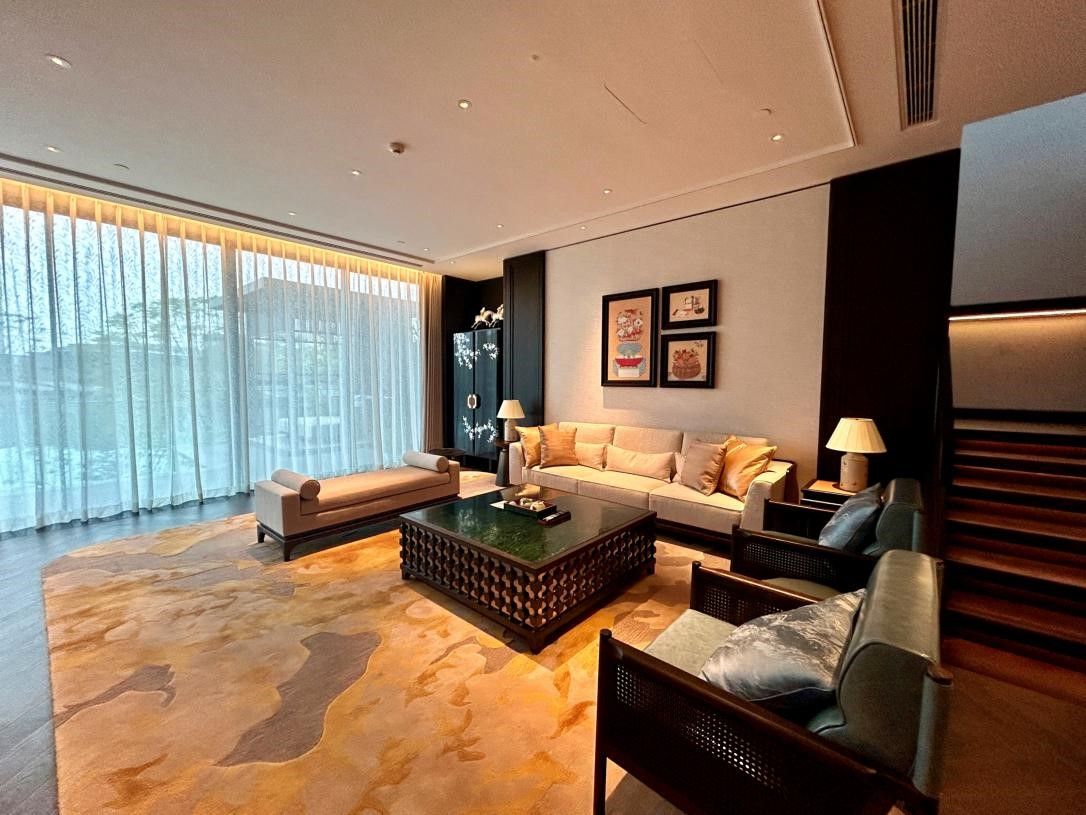
Interior of detached villas in the south district
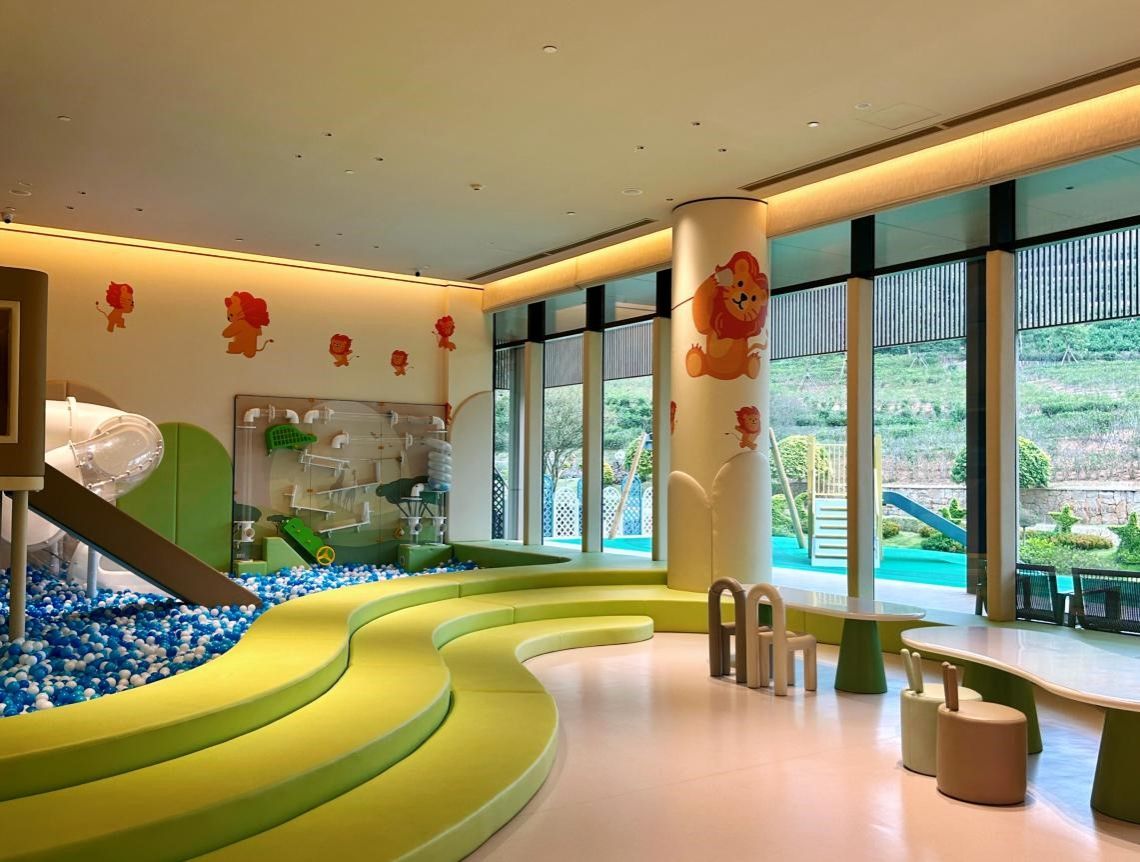
The hotel's family space "Little Lion Club"
After the tour, everyone gathered in the banquet hall to listen to Mr. Wang's in-depth sharing centered around three themes: "Integrating Western and Eastern brilliance, contemporary Chinese lifestyle manor experience, making entertainment compelling." The sharing was interactive, allowing students to earn game tokens by answering questions, which could be exchanged for MGM's special gifts, creating a lively atmosphere.
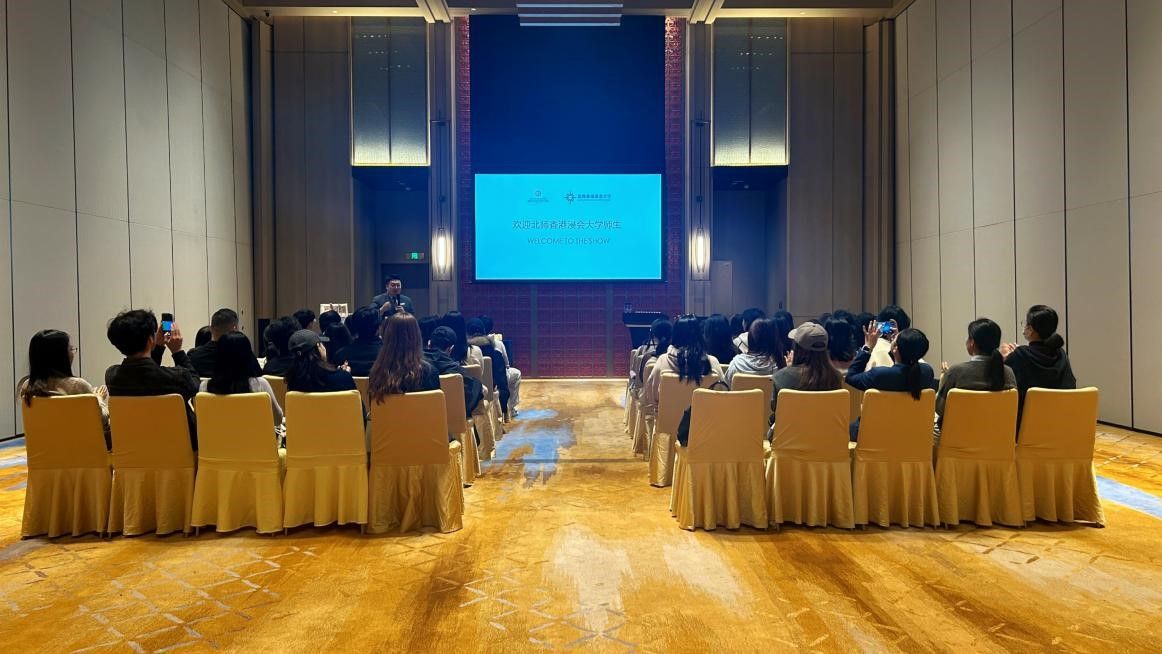
Post-tour in-depth sharing session
Mr. Wang began by discussing the historical connections between MGM and the Diaoyutai brand, elucidating the core concept of the Diaoyutai MGM Hotel Group—"integration", where culture extends beyond mere inheritance, aiming to awaken its contemporary vitality through innovative methods. The second segment focused on the brand's mission of "Exquisite China, Brilliant Contemporary", emphasizing the hotel's dedication to portraying contemporary Chinese hospitality, weaving aesthetic living and cultural sentiments into daily life, and introducing the concept of a "life-savvy": every employee is a life-savvy, sharing "life nourisher", naturally conveying the hotel's cultural nuances and vibrant stories to guests. The third segment introduced the internal "Exciting Recognition Program," which uses entertaining mechanisms to motivate employees, enhancing work experience and creativity.
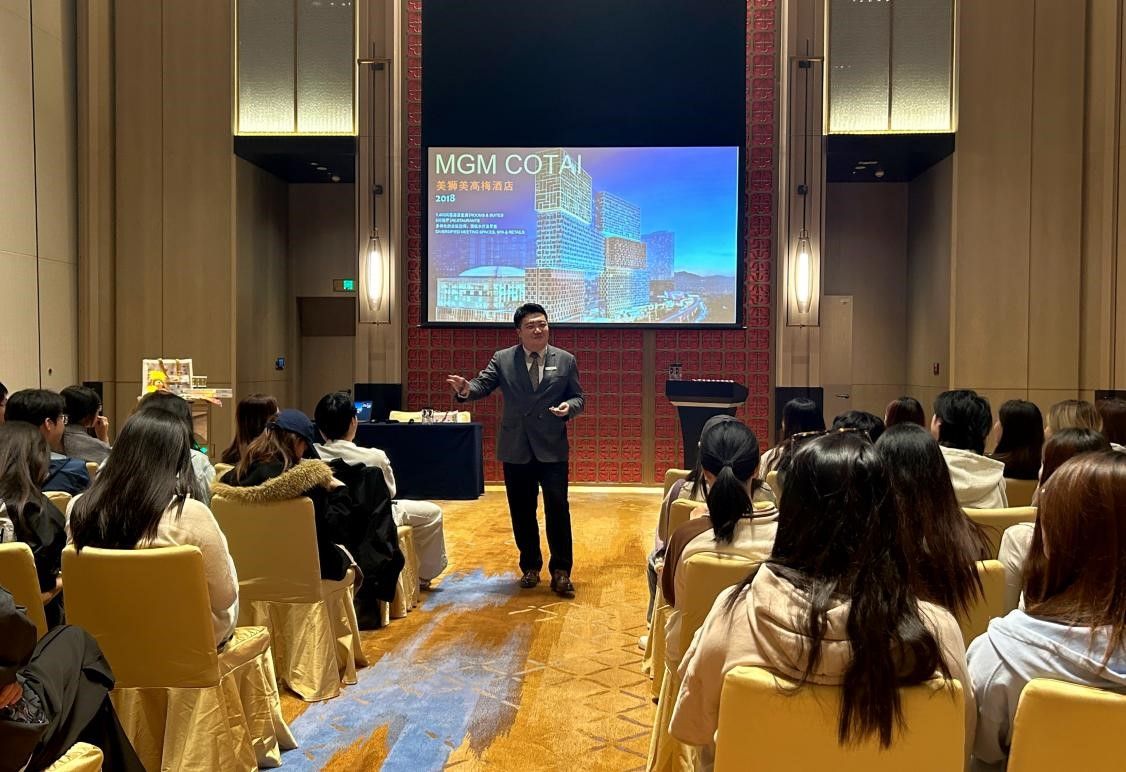
Mr. Wang narrated the brand story
During the Q&A session, students actively posed questions. For "how to convey the ' life-savvy ' concept to every guest", Mr. Wang replied that the hotel encourages employees to share vivid stories, such as "the black swans stealing fish" and "the little wild ducks recognizing food" through the " life-savvy guide" and corresponding service loops and incentive assessment mechanisms, making service warm and relatable. In response to "how to attract more foreign guests", Mr. Wang noted that the brand naturally attracts a substantial international clientele interested in Eastern culture through "MGM Oriental" cultural renewal events (such as the past Dunhuang theme), global clientele diversion among group hotels, and recruiting team members with international backgrounds. Addressing "how to balance luxury with friendly service", he stated that contemporary luxury now emphasizes service culture and emotional resonance rather than rigid standards, hence MGM Reserve Hotel strives to create the "most comfortable state" for guests by relying on thorough service training to ensure employees skillfully balance care and distance in subtleties.
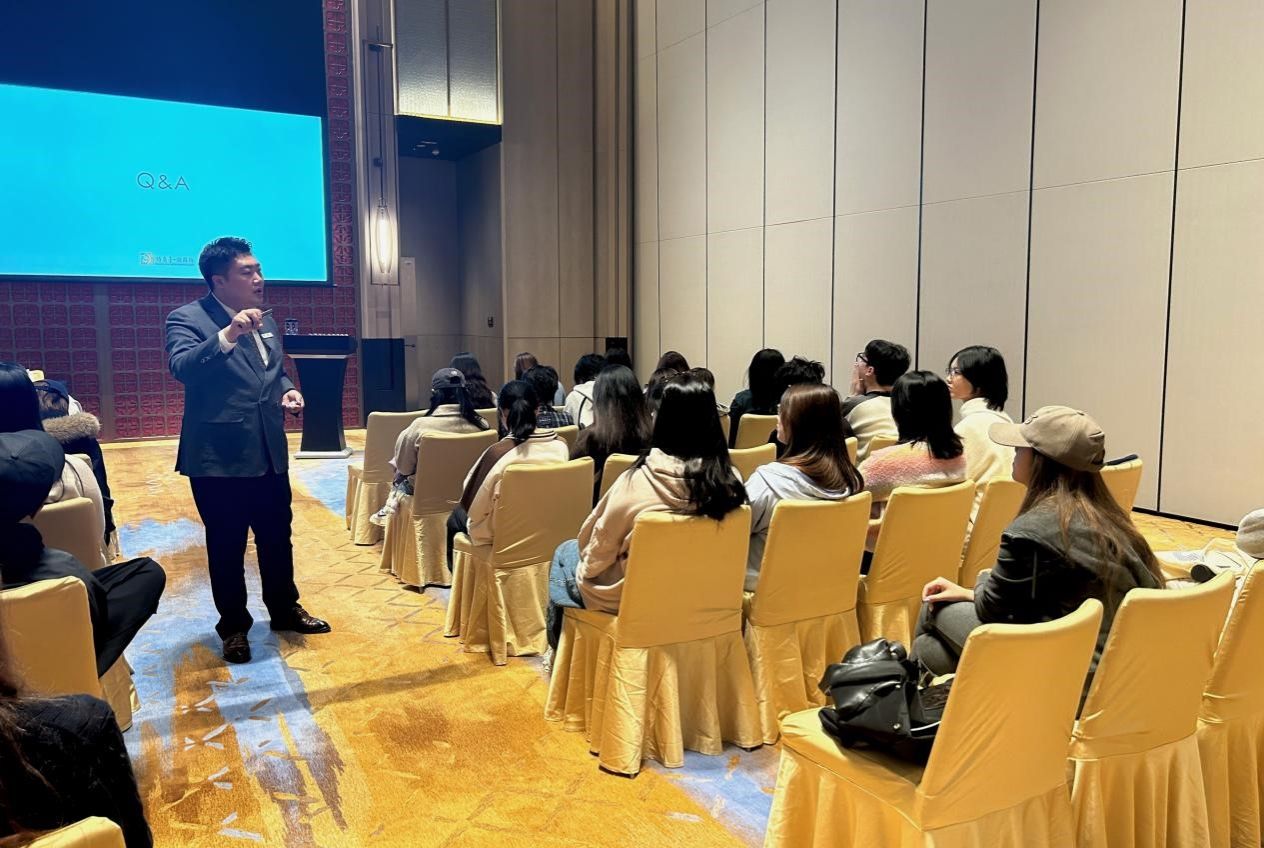
Mr. Wang answering students' questions
This practical activity enabled students to thoroughly understand the operational modes, cultural integration, and brand positioning of a high-end hotel. From the meticulous decoding of the architectural cultural aesthetics to the vivid presentation of service concepts, it not only provided vibrant practical cases for classroom knowledge but also sparked deep thoughts and keen interest among participants in the hospitality industry.
Text: Yimeng Wang, Yi Xie
Photo: Yimeng Wang, Yixin Tu
Contact Us
Follow Us

©2024-2025 Beijing Normal-Hong Kong Baptist University(BNBU).All Rights Reserved.粤ICP备07509519号粤公网安备44049102496044.